Salt Lake City Road Trip: Park City, Deer Valley & the Salt Flats
Watch the Salt Lake City Road Trip video distraction-free 0:24
Apart from the salt flats, every stop on this route lies within about an hour's drive of downtown Salt Lake City, and the airport is roughly 15 minutes from the centre. You can land, pick up a car and reach a ski lift or a lakeshore the same morning.
What ties these places together is one ancient lake basin and the mountain wall rising from its eastern edge. The city, the island and the salt sit on the old lakebed, while the ski towns sit up in the Wasatch, where Deer Valley has more than doubled its terrain with a new East Village base. The trip suits skiers, hikers and photographers who want peaks and desert from one base.
Listen to this guide
Prefer to listen? This guide is also a 6-minute episode of our podcast.

Also available as Trip Ideas by Ottimo AI on Spotify, Apple Podcasts and other podcast apps.
Salt Lake City
Why Visit
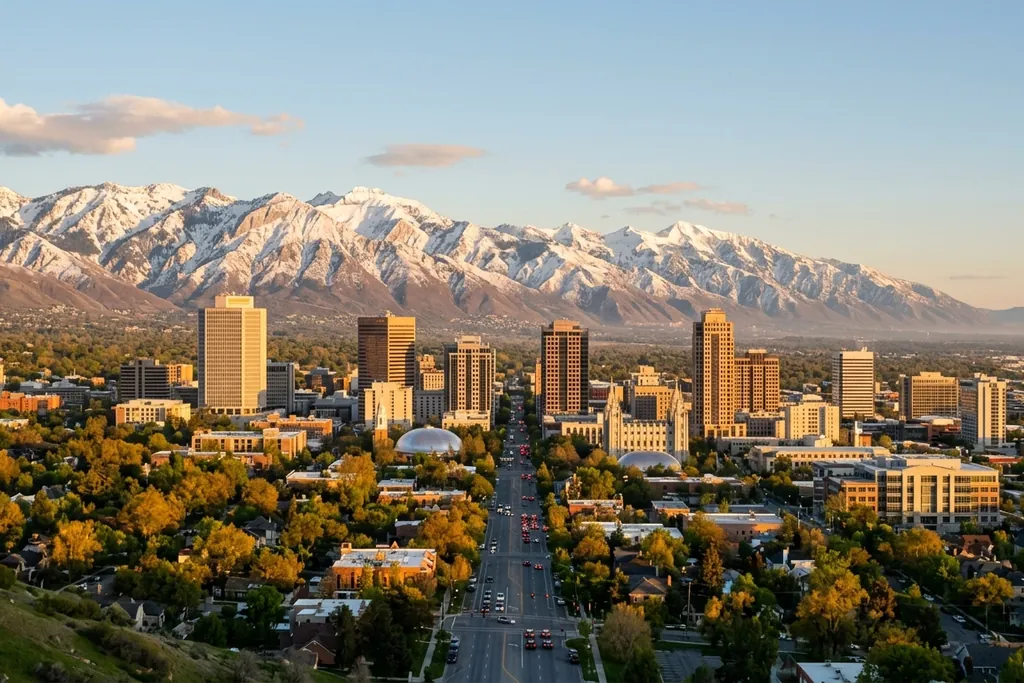
Salt Lake City's downtown streets are 132 feet wide. Brigham Young wanted them wide enough for a wagon and ox team to turn around. His pioneers laid out the grid from Temple Square in 1847, so addresses work like coordinates. 400 South 200 East means four blocks south and two blocks east of the temple.
The ground under the grid is stranger. The city sits on the bed of Lake Bonneville, a vast Ice Age lake that once spread across much of western Utah and spilled into Nevada and Idaho. Look at the foothills above the University of Utah and you'll see flat terraces cut into the slopes. Those are old shorelines, and the Bonneville Shoreline Trail follows one of them. The Great Salt Lake is the leftover puddle. It is too salty for fish, and storms crossing it help load the Wasatch with the dry snow that brought the 2002 Winter Olympics here.
When to Travel
Summers are hot and dry. July highs sit in the mid-90s Fahrenheit (about 35C), with almost no rain. Winter highs hover near freezing, and the valley has a known problem: inversions. Cold air gets trapped under warm air for days, holding smog over the city while the ski resorts above sit in sunshine. Spring and autumn are the best bet, with highs in the 60s and 70s F. Canyon leaves turn by late September. Late July brings Pioneer Day, a state holiday with a big parade and fireworks marking the 1847 arrival. Ski season, December to March, fills hotels with people using the city as a cheap base. Give the city two days, or more if you sleep here and drive out to the mountains.
What Not to Miss
Start at Temple Square. The Salt Lake Temple took 40 years to build, from 1853 to 1893, using granite hauled from Little Cottonwood Canyon. Next door, the Tabernacle was finished in 1867 with a domed roof and no interior pillars. Its organ has more than 11,000 pipes. The choir's Sunday morning broadcast has run since 1929, and anyone can attend.
For the layout of the whole valley, climb Ensign Peak. Brigham Young went up days after arriving to plan the city. It's a short, steep walk of around 20 to 30 minutes. Go at sunset, when the grid lights up below you.
Then eat a pastrami burger. That's a cheeseburger piled with hot pastrami, a combination spread by Greek immigrant burger stands across Utah. Order it with fry sauce, the state's pink mix of ketchup and mayonnaise. Utah scones are local too. They're fried dough served with honey butter, nothing like the British kind.
Takeaway
Grocery and convenience stores can only sell beer up to 5% alcohol. Wine, spirits and stronger beer come from state-run liquor stores, which close on Sundays and holidays, so stock up on Saturday.
Park City & Deer Valley
Why Visit
Park City's first lift-served skiers rode a mine train underground. When Treasure Mountains resort opened in 1963, its 'Skier Subway' carried people through an old drainage tunnel, then up a mine hoist to the slopes. Skiing began here as a rescue plan for a dying mining town.
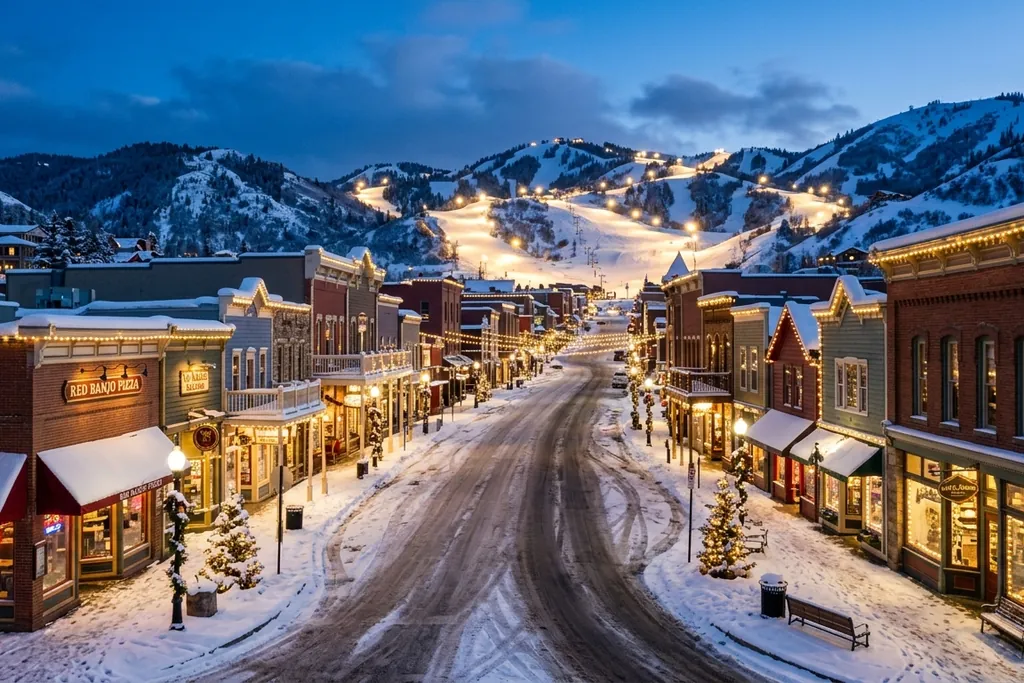
Soldiers found silver in these hills in 1868. The Ontario Mine added to George Hearst's fortune, the same family wealth that later helped launch his son William Randolph Hearst's newspaper empire. A fire in 1898 burned most of Main Street, which is why so much of it was rebuilt in brick. The steep wooden miners' houses in Old Town survived on the hillsides. After the mines declined in the mid-20th century, a federal loan helped turn the slopes into a ski area. Deer Valley followed in 1981. It is still skiers-only, one of very few US resorts that ban snowboards, and it hosted Olympic slalom, moguls and aerials in 2002.
When to Travel
Ski season runs from around late November to early April. The busiest stretches are Christmas to New Year and Presidents' Day weekend in February, when lift lines and Main Street traffic both peak. For decades, January also meant the Sundance Film Festival crowds, though the festival has announced a move to Boulder, Colorado later this decade. Summers are a good deal: highs around 80F, nights in the 40s and 50s F, and short afternoon thunderstorms in July and August. Avoid mud season, roughly April to May and late October to November, when many restaurants close and trails are soft. September is the best shoulder month, with aspens turning gold and lodging cheaper. Main Street sits near 7,000 feet, so take the first day easy. Plan two to three days.
What Not to Miss
Utah Olympic Park, a 2002 venue, is still a working training site. In summer you can watch freestyle aerialists flip off ramps into a splash pool. Year-round, you can book a ride down the bobsled track behind a professional driver.
Look for the mining relics on Park City Mountain. Old mill and headframe buildings, such as the California-Comstock and Silver King structures, stand right beside ski runs and summer hiking trails. The local historical society has put up signs explaining them. They're easiest to reach on foot from June to September.
On Main Street, the Egyptian Theatre dates from 1926, built during the Egyptian-revival craze that followed the opening of Tutankhamun's tomb. Stop for a local beer while you're there. Park City had one of Utah's first modern breweries, opened in 1986, and it named its beers after the state's quirks. Polygamy Porter is the one people take home.
Takeaway
Don't drive to Main Street in winter, because Old Town parking is scarce and paid. Park City's free buses link Old Town, Park City Mountain, Canyons Village and Deer Valley, so leave the car at your lodging.
Little Cottonwood Canyon (Alta & Snowbird)
Why Visit
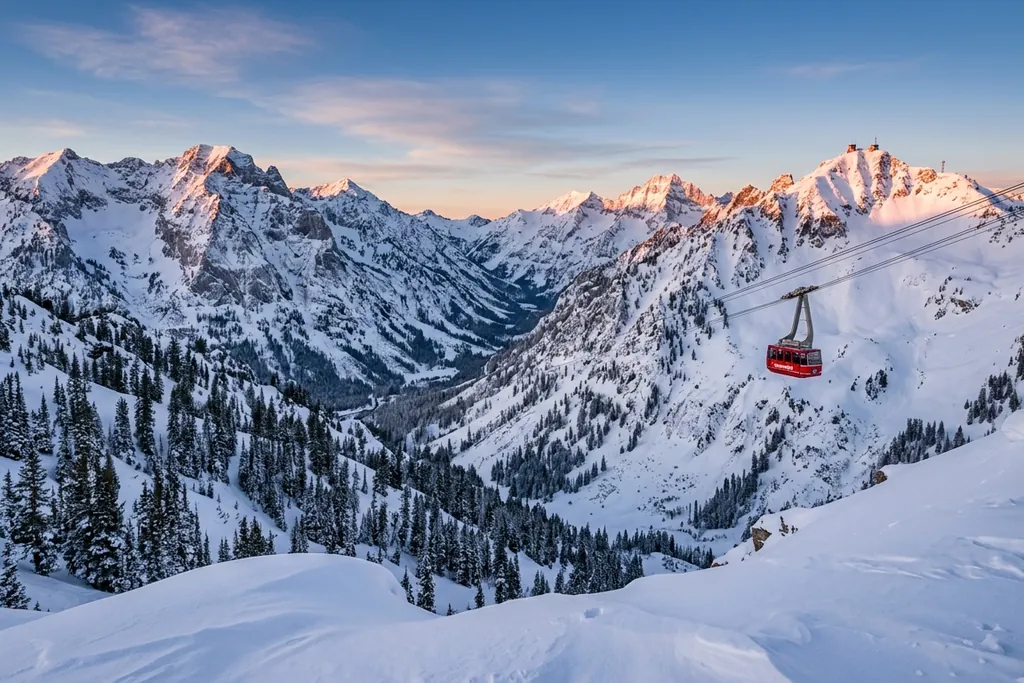
Alta gets around 500 inches of snow a season, which is more than 40 feet. Storms pick up moisture crossing the Great Salt Lake, then stall against the Wasatch and drop it as cold, light powder. The canyon itself is a glacier's work. Its U-shaped profile is easy to spot next to Big Cottonwood Canyon, the V-shaped, river-cut valley to the north.
Alta started as a silver boomtown in the 1870s, and avalanches flattened it repeatedly. It reopened for skiing in 1939 with one of the first chairlifts in the US. Snowbird arrived in 1971, with an aerial tram climbing to Hidden Peak at 11,000 feet. Like Deer Valley, Alta is skiers-only. The canyon also gave Salt Lake its temple. Granite from quarries near the mouth was hauled down the valley for decades, and the same cliffs now hold the church's Granite Mountain Records Vault, built into the rock to store genealogical microfilm.
When to Travel
Ski season usually runs from mid-November to April. Snowbird often stays open into May, and in big years longer. Storm days are both the best and worst days to come. Snow is deepest then, but the road closes for avalanche control and weekend traffic backs up for miles. Midweek in January and February brings the most reliable powder with fewer people. Summer is underrated. At 8,000 to 10,000 feet, highs sit in the 60s and 70s F, with afternoon thunderstorms in July and August. Albion Basin's wildflowers peak from late July into early August. Snowbird's Oktoberfest runs on weekends from late summer into October. Two days covers both resorts or a good hiking trip.
What Not to Miss
Take the Snowbird tram to Hidden Peak. It holds over 100 people and climbs about 2,900 vertical feet in under ten minutes. From the top you can see across the Wasatch and, on clear days, toward the Great Salt Lake. It runs in summer too. Go early, before the afternoon storms build.
In summer, drive the gravel road above Alta to Albion Basin and walk to Cecret Lake. It's under two miles round trip and passes meadows of lupine, paintbrush and columbine. Parking fills by mid-morning in peak season, so arrive early.
On the way up, watch for the Records Vault portals cut into the granite near the canyon mouth. It isn't open to visitors. After a day up high, Snowbird's Oktoberfest weekends serve Utah-brewed beer and bratwurst at 8,000 feet, and the beer hits harder at that altitude.
Takeaway
On powder days, be at the canyon mouth before 7:30am and check UDOT's Cottonwood Canyons updates first. During storms, a traction law requires 4WD, AWD or chains, and many rental cars come with tyres that don't qualify.
Antelope Island State Park
Why Visit
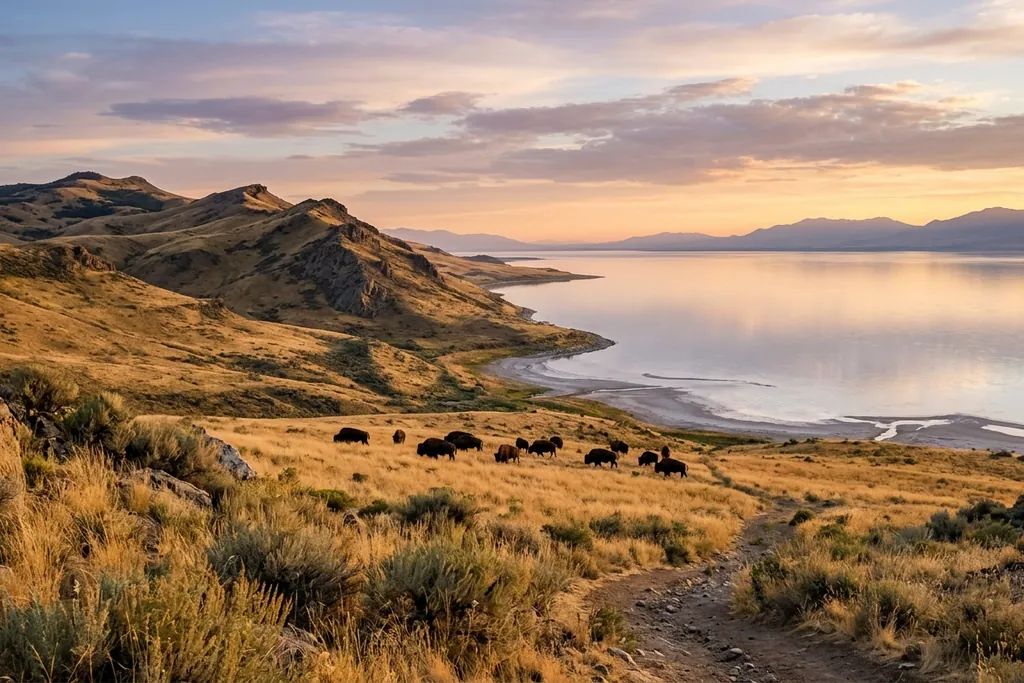
The bison on Antelope Island came by boat. In 1893, twelve animals were ferried across the Great Salt Lake by private owners. Their descendants now number several hundred and roam free over an island about 15 miles long. Every autumn the herd is rounded up for health checks.
The name dates from 1845. John C. Frémont and Kit Carson rode out and hunted pronghorn here, and pronghorn still graze the grasslands. The island's core is some of the oldest rock in Utah, around 1.7 billion years old, lifted by the same kind of Basin and Range faulting that raised the Wasatch. The water around it is often several times saltier than the ocean. No fish live in it. Brine shrimp and brine flies thrive instead, and they feed millions of migrating birds, including huge flocks of eared grebes and phalaropes. You reach the island on a causeway about seven miles long.
When to Travel
April and May bring green hills, wildflowers and orange-coloured bison calves. From roughly mid-May through June, though, biting gnats can make the island miserable. Summers reach the 90s F, with almost no shade. Swarms of harmless brine flies coat the beaches, and they scatter as you walk. September and October are the best months: cooler, clear, and full of migrating birds. The bison roundup takes place in late October or November, and the public can watch parts of it. Winters are cold and quiet, and bison in snow make good photographs. Half a day covers the highlights. Stay until dark if you can, since the island is a certified dark-sky park.
What Not to Miss
Drive the east-shore road to Fielding Garr Ranch, at the island's south end. Its adobe house dates from 1848 and is one of the oldest Anglo-built houses in Utah. It worked as a ranch until 1981. The road passes most of the bison, especially in the morning.
Climb Buffalo Point near the north end for sunset. It's a short, steep trail of about 20 minutes, and from the top you look west over open water and the Stansbury Mountains.
Then float at Bridger Bay. The salt keeps you higher in the water than any ocean will. Brine stings any cut, so keep it out of your eyes, and use the freshwater showers afterwards. Food on the island is limited. A small concession has served bison burgers made from local animals, but pack a picnic in case it's closed.
Takeaway
If you visit in late May or June, wear long sleeves and pack a head net. The tiny gnats ignore most repellents, and people who come in shorts often leave within the hour.
Bonneville Salt Flats
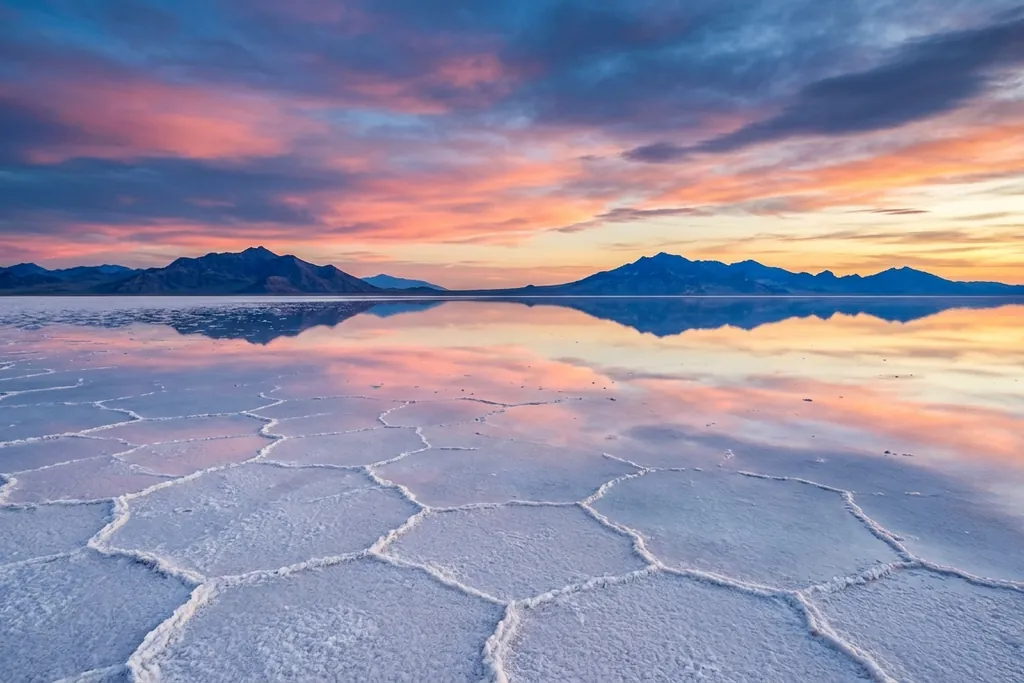
Why Visit
In 1846, the Donner Party lost days dragging wagons across this salt. Their wheels broke through the crust into mud, and several wagons were abandoned. That delay helped trap them in the Sierra Nevada snows weeks later.
The flats are the floor of Lake Bonneville, left behind as it evaporated. The crust is mostly ordinary sodium chloride, the same compound as table salt. Each winter, rain floods it a few inches deep. Wind pushes the water back and forth, and as it evaporates in summer, it leaves a surface smoother than most paved roads. That flatness drew racers from 1914 onward. In 1970 the Blue Flame rocket car set a land speed record of over 622 mph here. The crust has thinned over the last century, partly from nearby potash mining, and a program now pumps brine back onto the flats to rebuild it. The flats lie about two hours west of Salt Lake City on I-80, near Wendover on the Nevada line.
When to Travel
The salt is driest and firmest from late summer to autumn. That's racing season. Speed Week is held each August, and more land speed events follow in September and October, though wet years can cancel them. Summer middays reach 90 to 100F or more, and the glare off white salt is intense. For the famous mirror effect, come from late winter into spring, when a thin sheet of standing water reflects the sky and the mountains. Winters are cold and often windy. Spend half a day, and plan it so you reach the salt in the last hour or two before sunset.
What Not to Miss
Stop at the I-80 rest area on the flats for your first walk onto the salt. Walk a few hundred metres out, away from the footprints, to find untouched crust with its hexagonal ridges.
If the salt is dry, take the paved access road near Wendover to where the racecourse is laid out. The horizon here is so flat that distant mountains seem to float above the ground, a mirage caused by heat layers over the salt. Spring water turns the same view into a mirror. Wear old shoes, because salt sticks to everything.
On the drive, watch for the Tree of Utah, an 87-foot concrete sculpture by Karl Momen standing alone beside the interstate. In Wendover, the old airfield is where the Enola Gay crew trained during World War II, and some wartime hangars still stand. There's no food out on the flats, so bring lunch and plenty of water from Salt Lake City.
Takeaway
Never drive onto the salt when it's wet. A crust that looks solid can hide mud beneath, and many rental contracts forbid it anyway. Even when it's dry, wash the undercarriage at a car wash afterwards, because salt corrodes it fast.
Start with two days in Salt Lake City, where the lower elevation eases you in before the mountains, and fit Antelope Island in as a half-day trip north. Then head up Little Cottonwood Canyon and over to Park City and Deer Valley. Finish with the salt flats, which lie west along I-80 and make a natural last stop if you're continuing into Nevada. Allow eight to nine days. Before booking, decide between snow and dry salt, because ski season and racing season don't overlap.
Frequently Asked Questions
Is Salt Lake City worth visiting?
Yes, Salt Lake City is well worth a visit, especially as a base for the Wasatch mountains. Its wide streets and coordinate-style grid radiate from Temple Square, the foothills still show terraces from an Ice Age lake, and you can climb Ensign Peak at sunset for a view over the valley. Don't leave without a pastrami burger with fry sauce.
When is the best time to visit Park City?
September is the best time to visit Park City if you want gold aspens, cheaper lodging and fewer crowds. Skiers should come between late November and early April, but expect the busiest slopes over the Christmas holidays and Presidents' Day weekend. Summer brings warm days and cool nights, while spring and late-autumn mud season is best avoided, as many restaurants close.
What is Alta Utah known for?
Alta is famous for its deep, light powder, with around 500 inches of snow falling in a typical season. Storms pick up moisture over the Great Salt Lake and stall against the Wasatch, dumping cold, dry snow into Little Cottonwood Canyon. The canyon itself was carved by a glacier, and its classic U-shaped profile is easy to spot.