Seoul City Guide: Palaces, Hanok Alleys & Namsan Tower
Watch the Seoul City Guide video distraction-free 0:24
For about five centuries before it became Seoul, this city was known as Hanyang, the Joseon dynasty's capital. Every stop in this guide traces back to that era, whether it was built by its kings, settled by its officials and commoners, or fortified against its invaders.
That shared thread runs through palace courtyards, tiled-roof alleys, a lookout hill, a granite national park and a walled city south of the capital. This trip suits travellers who want history and a big, modern city in the same day, and who are happy to hike between meals. It also suits anyone curious about the Jongno 3-ga that Time Out once named the world's coolest neighbourhood.
Listen to this guide
Prefer to listen? This guide is also a 6-minute episode of our podcast.

Also available as Trip Ideas by Ottimo AI on Spotify, Apple Podcasts and other podcast apps.
Gyeongbokgung Palace & Bukchon Hanok Village
Why Visit
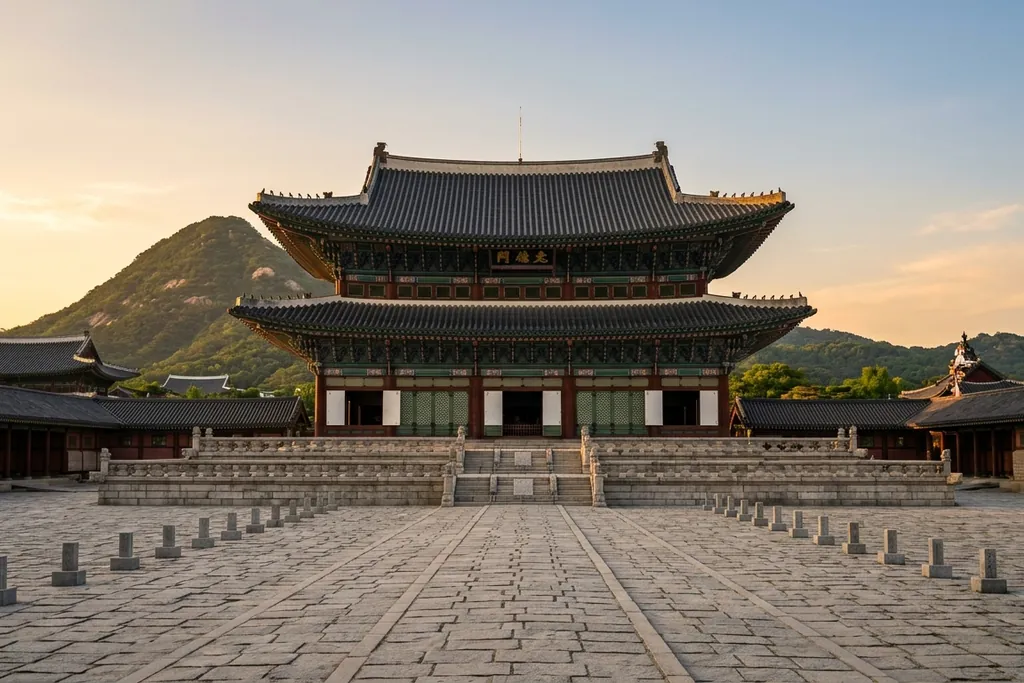
Only around a tenth of Gyeongbokgung's buildings survived Japanese colonial rule. Much of what you walk through has been rebuilt since 1990. The palace went up in 1395 as the main seat of the new Joseon dynasty. It burned during the Japanese invasions of 1592 and sat in ruins for about 270 years. A regent rebuilt it in the 1860s. Colonial authorities then demolished most of it and placed their headquarters in front of the throne hall. That building came down in the 1990s, and reconstruction is still going.
The site was chosen by geomancy. Bugaksan guards the back, Namsan sits in front, and a stream ran between them. Bukchon, the 'north village' between Gyeongbokgung and Changdeokgung, housed court officials because it was close to power. Most of its hanok date from the 1920s and 1930s. Big estates were split into smaller urban houses with clay-tile roofs and ondol underfloor heating.
When to Travel
Seoul has four sharp seasons. Winter lows often drop below minus 10C, with dry wind from Siberia. July and August sit around 30C with heavy humidity, and the jangma monsoon, roughly late June through July, brings a large share of the year's rain. Spring and autumn are the best seasons. Cherry blossoms arrive around early April, and ginkgo and maple colour comes from late October. Those weeks also bring peak crowds, plus school groups in spring. The palaces run limited evening openings in spring and autumn, and tickets go fast. Seollal (January or February) and Chuseok (September or October) empty the shops but fill the palaces. Give Gyeongbokgung and Bukchon one full day, ideally a weekday.
What Not to Miss
Start at Gwanghwamun for the gate guard ceremony, which runs a few times a day. Then walk north past Geunjeongjeon, the throne hall, to Gyeonghoeru, the banquet pavilion raised on 48 stone pillars over its pond. Allow three hours. Under a long-running policy, visitors wearing hanbok get into the royal palaces free. That's why so many visitors look like Joseon courtiers.
In Bukchon, the best rooflines are on the sloping lanes of Gahoe-dong. These are lived-in homes, and the district restricts tourist access to the core lanes in the evening. Go in the morning and keep your voice down.
For lunch, find samgyetang: a whole young chicken stuffed with glutinous rice, ginseng and jujube. Koreans eat it on the hottest days of summer, the boknal, on the principle that you fight heat with heat.
Takeaway
Check for the spring and autumn night-opening tickets weeks ahead, because they sell out within minutes of release. Otherwise, arrive right at opening time, before the tour buses land mid-morning.
Ikseon-dong & Jongno 3-ga
Why Visit
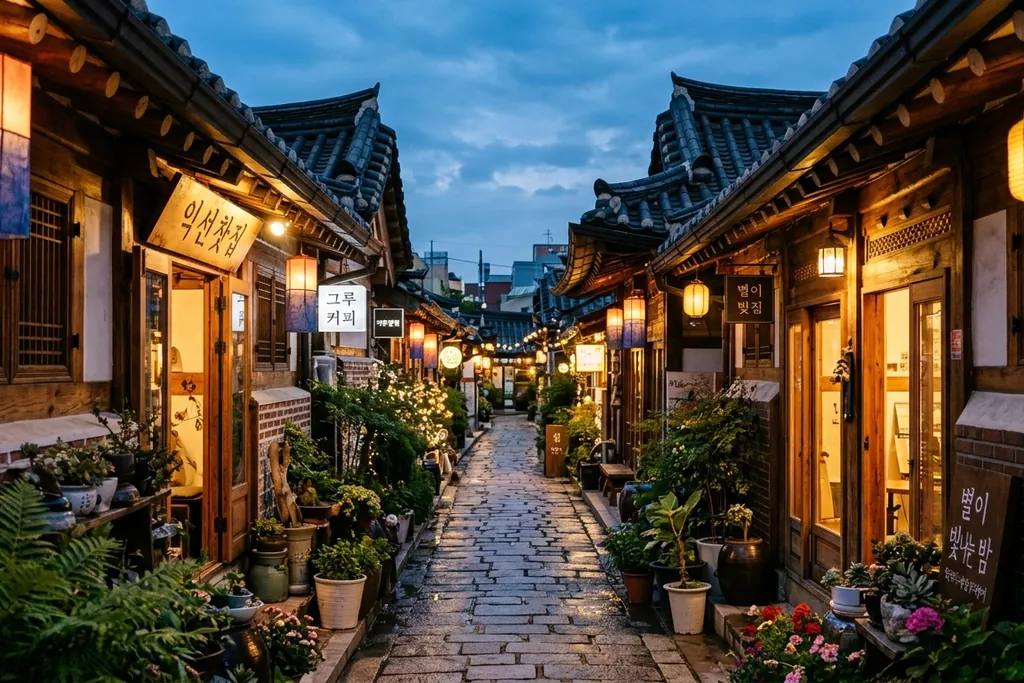
Ikseon-dong's alleys are so narrow you can nearly touch both walls, and for years the neighbourhood was earmarked for demolition. Its tight cluster of hanok was built in the 1920s and early 1930s as compact housing for ordinary Seoulites. They are among the earliest mass-built hanok in the city. Redevelopment plans froze the area, so nothing was replaced. In the mid-2010s, young owners began turning the houses into cafes and bars, keeping the tiled roofs and wooden beams.
Jongno 3-ga next door is older Seoul. Jongno means 'bell street', after the Bosingak bell that once signalled the city gates opening and closing. Commoners ducked into the parallel back lane of Pimatgol, literally 'avoid horse alley', so they didn't have to bow every time an official rode past. Tapgol Park, a short walk west, is where the independence declaration was read aloud in March 1919.
When to Travel
The climate matches central Seoul: icy winters, hot humid summers, monsoon rain in July. This area is at its best in the evening, so night-time weather matters most. From roughly April to June and September to October, the tent bars and grill stalls of Jongno 3-ga spill onto the pavement, and sitting outside is comfortable. In deep winter, the tents get plastic walls and heaters. On weekends Ikseon-dong fills with Seoul's twenty-somethings, and the alleys can jam completely. Come on a weekday afternoon and stay into the night. In May, the Jongmyo Jerye royal ancestral rite is performed at Jongmyo Shrine, a few minutes' walk away. Half a day plus an evening is enough.
What Not to Miss
Walk Ikseon-dong in daylight first, around mid-afternoon, to see the hanok details. Look for carved wooden doors and old courtyards turned into dining rooms under glass roofs. An hour covers it.
Then cross to Jongmyo, which holds the spirit tablets of Joseon kings and queens. It has been a UNESCO site since 1995. Its main hall, Jeongjeon, is among the longest single wooden buildings in Asia. Entry is often by guided tour only, so check the schedule.
After dark, find the pojangmacha tents near Jongno 3-ga station for plastic stools, soju and grilled pork. Then walk east to Gwangjang Market, trading for well over a century, for bindaetteok. This thick mung bean pancake is made from beans ground fresh at the stalls and fried in plenty of oil until the edges crunch.
Takeaway
Carry cash in small notes for the Jongno 3-ga tents and the Gwangjang stalls. Most places take cards now, but older vendors prefer cash, and it makes splitting a table of shared plates much easier.
Namsan & N Seoul Tower
Why Visit
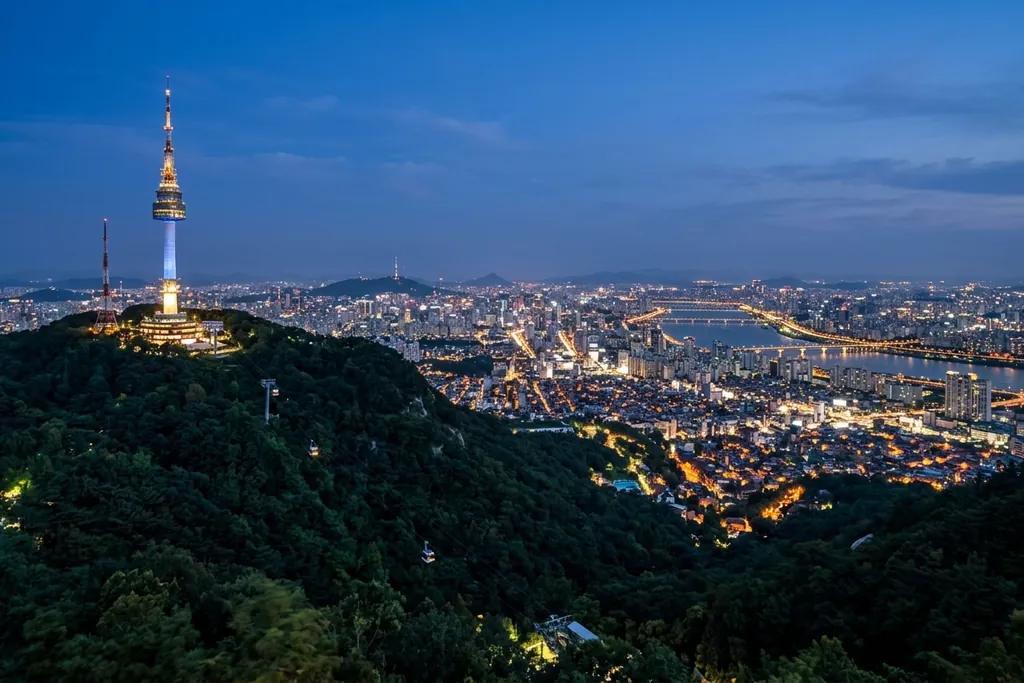
N Seoul Tower started life as a TV transmitter. It was built around 1970 to broadcast across the capital and only opened to the public in 1980. Much of its height is borrowed from the hill: perched on Namsan's summit, the observation deck sits far higher above the city than the tower alone could reach.
Namsan was the southern guardian mountain of Joseon Seoul, and its summit has long been a signalling point. The restored beacon mounds at the top once received smoke and fire signals relayed from the borders. One fire meant all was quiet, and more fires meant trouble. The city wall, begun in 1396, also climbs over the summit as part of an 18.6 km loop linking Seoul's four inner mountains. Namsan's pines are even named in the national anthem.
When to Travel
Visibility decides everything here. Spring brings hwangsa, yellow dust blown in from the Gobi and northern China, plus fine dust, so the view from March to May can turn brown. Summer haze and monsoon cloud cause the same problem. The clearest air usually comes from late September to November, and on cold, windy winter days after a front passes. Cherry trees line Namsan's circular roads in early April, and the maples turn in late October. Weekends and summer evenings mean long queues for the cable car and the tower lifts. Check an air quality app and save Namsan for the clearest day of your trip. It needs half a day.
What Not to Miss
Walk up instead of taking the cable car. The car-free northern circular road and the city wall path reach the summit in about 45 minutes to an hour. Along the way, you can date the wall by its stones: rough fieldstone from the 1390s, oblong blocks from the 1400s and big squared stones from the 1700s. Aim to reach the top just before sunset and stay while the city lights come on.
At the summit, the free terrace by the beacon mounds gives a view nearly as good as the paid deck.
On the way down, eat donkkaseu on Sopa-ro, the road curving around the hill's lower slopes. Taxi drivers made these oversized, thinly pounded pork cutlets a fixture, stopping for big, quick plates on their routes.
Takeaway
If you'd rather not walk, skip the cable car queue and take one of the small Namsan shuttle buses from near Chungmuro or Dongguk University station. They climb almost to the tower, and a regular transit card works.
Bukhansan National Park
Why Visit
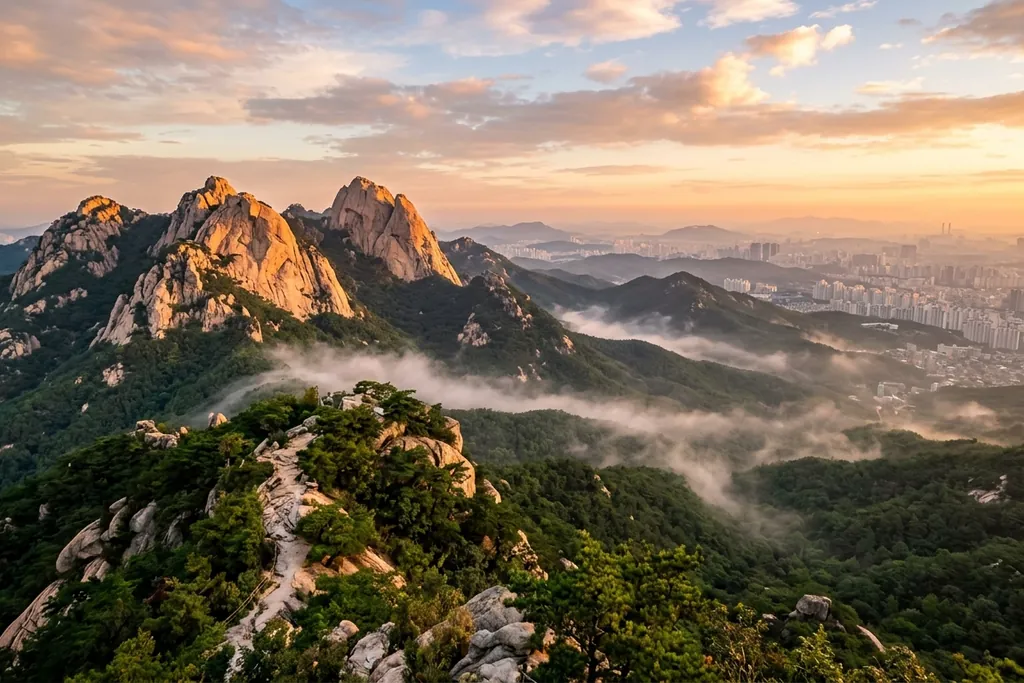
Bukhansan has bare granite summits on the very edge of a sprawling capital of millions, and you can reach the trailheads by subway. That access helps explain why it draws millions of hikers every year. The crowds are legendary: few national parks anywhere see so many boots per square kilometre.
The peaks are granite that cooled deep underground and was exposed as softer rock eroded away. That's why Baegundae (836 metres), Insubong and Mangyeongdae stand as pale rock faces above the forest. Those natural walls made the mountain a refuge. After the Manchu invasions of 1636, King Sukjong had Bukhansanseong fortress built along the ridges in 1711. Its walls run for about 13 km, enough to shelter the royal court during a siege. Gates and stretches of wall still line the trails.
When to Travel
Hike in spring or autumn. Azaleas cover the ridges in April. From mid-October to early November the maples and oaks turn, and the trails are at their busiest. Summer is hot, humid and stormy, and wet granite is slippery, so avoid the monsoon weeks from late June through July. Winter is clear and cold, often below freezing on top, and the rocky final sections ice over. Locals carry small chain crampons. Weekends bring a steady stream of Seoulites in full hiking kit, so go on a weekday and start early. Some trails close during the dry spring and autumn fire seasons, so check the park's notices. One day is enough for Baegundae. Add a second for a quieter ridge or temple.
What Not to Miss
The classic hike is Baegundae from the Bukhansanseong trailhead, a short bus ride from Gupabal station on Line 3. Allow a good half-day for the round trip at a steady pace. The trail passes old fortress gates and walls. The last stretch is steep, bare granite with steel cables and handholds. The summit platform is tiny, so aim to top out before late morning.
After the hike, do what Korean hikers do. Sit down at a restaurant near the trailhead for pajeon, a crisp green onion pancake, and makgeolli. This milky rice wine is fermented with nuruk, a wheat-based starter. Its mild fizz and low alcohol made it the standard post-hike drink, usually poured into shallow metal bowls.
Takeaway
Wear shoes with real grip, because the summit granite is polished smooth by millions of boots. Carry water and snacks, since there's nothing to buy above the trailhead area.
Suwon Hwaseong Fortress
Why Visit
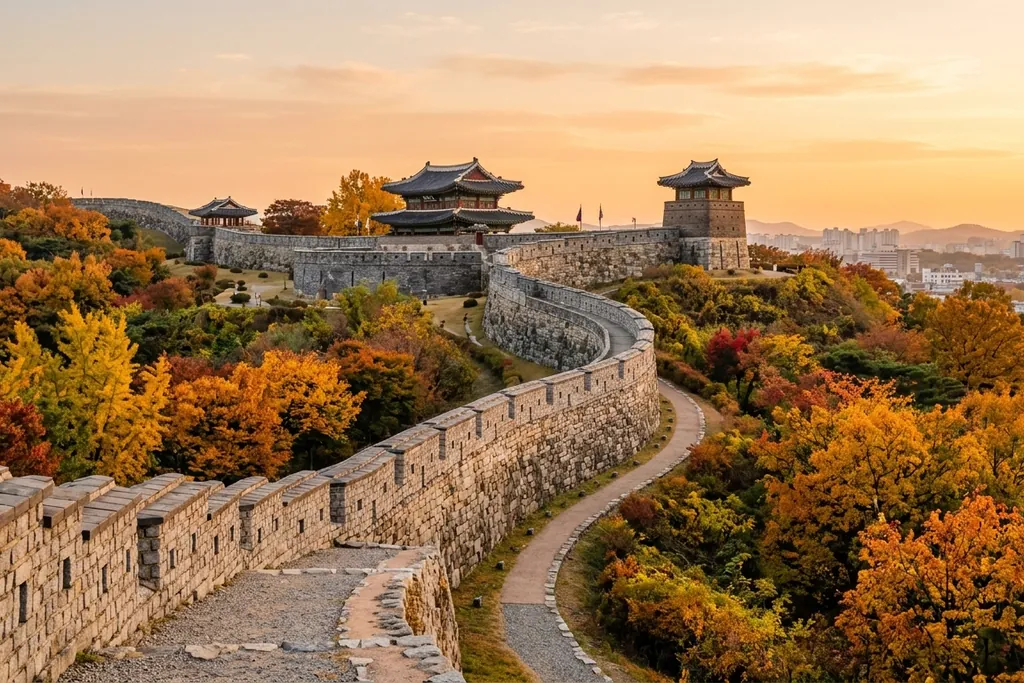
Hwaseong Fortress was badly damaged during the Korean War, yet it was rebuilt so faithfully that UNESCO listed it in 1997. That was possible because an 1801 construction report recorded everything, from the dimensions of each structure to the workers' wages, with detailed drawings.
King Jeongjo built the fortress between 1794 and 1796 to protect the relocated tomb of his father, Crown Prince Sado. Sado died in 1762 after being locked in a rice chest on the orders of his own father. The scholar Jeong Yak-yong designed lifting gear, including a pulley crane, that helped finish the work in under three years, far ahead of the original ten-year estimate. The walls run about 5.7 km and mix stone with brick. They also combine Korean and Chinese defensive ideas, with watchtowers, gun turrets and a floodgate where a stream passes under the wall.
When to Travel
Suwon lies about 30 km south of central Seoul and shares its weather. The wall walk is exposed, with little shade on the ramparts, so the July and August heat is the main problem. Spring and autumn are best. In autumn, usually around October, the Suwon Hwaseong Cultural Festival re-enacts King Jeongjo's royal procession to his father's tomb, and the town fills up. Weekends year-round draw families from Seoul. Winter days are clear but windy on the higher western ridge. One full day covers the wall, the palace and dinner. Suwon is an easy trip from Seoul on subway Line 1.
What Not to Miss
Walk the full wall circuit, which takes two to three hours. Start near Paldalmun, the south gate, and climb the stairs up Paldalsan to Seojangdae, the western command post at the highest point, while your legs are fresh. Many visitors leave this steep part for last. Stop at Banghwasuryujeong, a pavilion and watchtower above a pond, where locals picnic on the grass.
At Hwaseong Haenggung, the palace where Jeongjo stayed on his visits, a rice chest display tells Sado's story.
For dinner, choose between two Suwon specialties. Suwon galbi uses big, salt-seasoned beef ribs instead of the usual soy marinade. The style grew out of the city's old cattle market. The other option is the fried chicken alley near Paldalmun, where whole chickens are fried in big cauldrons.
Takeaway
Stay until dark. The wall is floodlit at night, and the stretch from Banghwasuryujeong to Hwahongmun, the seven-arched floodgate, is at its best then, with far fewer people.
Start with Gyeongbokgung and Bukchon to get your bearings in the old centre. Then spend the following afternoon and evening in Ikseon-dong and Jongno 3-ga. Keep Namsan flexible and slot it in whenever the air is clearest. Do Bukhansan on a weekday, and fit Suwon in as a day trip around the others. Five to six days covers everything at a comfortable pace. Before you go, download a Korean map app, because Google Maps gives only limited walking directions in South Korea.
Frequently Asked Questions
Is Gyeongbokgung Palace & Bukchon Hanok Village worth visiting?
Yes, this is the heart of historic Seoul and well worth a full day. Gyeongbokgung was the Joseon dynasty's main palace, and much of it has been painstakingly rebuilt after colonial-era demolition. Next door, Bukchon's lived-in hanok lanes, especially the sloping streets of Gahoe-dong, show off tiled rooflines beautifully. Visit in the morning and keep your voice down for residents.
When is the best time to visit Seoul?
Spring and autumn are the best times to visit Seoul, with mild weather, cherry blossoms in spring and vivid ginkgo and maple colour later in autumn. They're also the busiest seasons, so aim for weekdays. Summer is hot, humid and hit by monsoon rain, while winter brings icy Siberian winds. Evenings in Jongno 3-ga's outdoor tent bars are especially pleasant in these shoulder months.
How much time do you need for Ikseon-dong and Jongno 3-ga?
Half a day plus an evening is enough for Ikseon-dong and Jongno 3-ga. Arrive on a weekday afternoon to explore Ikseon-dong's narrow hanok alleys, now filled with cafes and bars, then visit nearby Jongmyo Shrine. After dark, settle into the pojangmacha tents near Jongno 3-ga station and finish with crispy bindaetteok at Gwangjang Market. Bring small cash for older vendors.