Muskoka Road Trip: Gravenhurst, Port Carling & Algonquin Park
Watch the Muskoka Road Trip video distraction-free 0:24
The whole route, from Gravenhurst to Algonquin's West Gate with the Dorset detour, comes to under 200 kilometres, and no single leg takes much more than an hour to drive. You can base yourself in two towns and still reach every stop without a long day in the car.
The thread linking Gravenhurst, Port Carling, Huntsville and Lake of Bays, and the Algonquin corridor is water transport: wharves, locks, a portage railway and canoe routes that moved people north before roads did. That lake-and-cottage country got a surge of attention after Heated Rivalry set its finale at a Lake Muskoka cottage. The trip suits drivers who want short hops, history readers, and anyone timing a hike to fall colour.
Listen to this guide
Prefer to listen? This guide is also a 6-minute episode of our podcast.

Also available as Trip Ideas by Ottimo AI on Spotify, Apple Podcasts and other podcast apps.
Gravenhurst & Muskoka Wharf
Why Visit
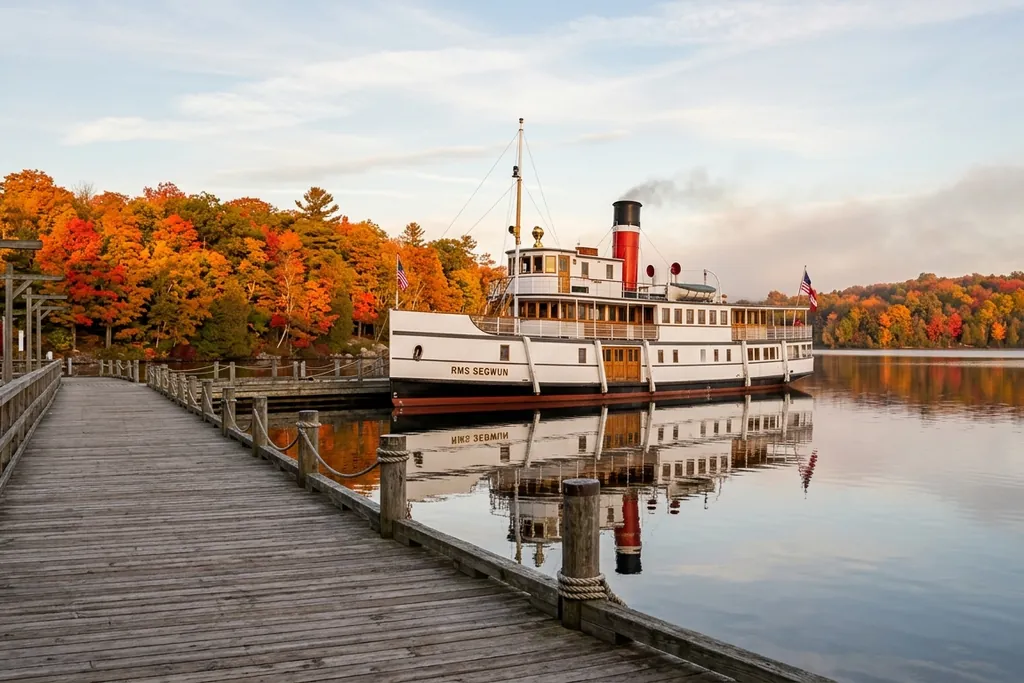
The RMS Segwun, tied up at Muskoka Wharf, has been on these lakes since 1887. That makes it one of the oldest operating steamships in North America, and it's widely billed as the oldest. It began life as a paddle steamer called Nipissing and was rebuilt with propellers in 1925. Segwun is usually translated from Ojibwe as springtime.
The boat explains the town. In 1875 the railway from Toronto reached Gravenhurst, at the south tip of Lake Muskoka, and stopped. North of here was water and granite. Trains unloaded at the wharf onto steamers, which carried settlers, lumber and later summer families across three connected lakes. So many sawmills lined the shore that Gravenhurst earned the nickname Sawdust City.
The air drew another crowd. One of Canada's first tuberculosis sanatoriums opened here in 1897. Norman Bethune, the surgeon still honoured in China, was born in Gravenhurst in 1890.
When to Travel
July and August bring highs around 25°C and water warm enough to swim. They also bring the worst traffic, as Toronto drives north up Highway 11 every Friday afternoon. The steamships usually run from late spring to mid-October.
Late September and early October is the best window. Days sit around 12 to 18°C, nights drop near freezing, the maples turn, and weekday cruises are half empty. Bala, a short drive to the northwest, holds a cranberry festival in autumn, timed to the harvest in the surrounding bogs. Winter nights fall below minus 15°C and the lake freezes solid. Give Gravenhurst one full day, or two if you want a long cruise plus the Bethune house.
What Not to Miss
Take a steamship cruise. The Segwun burns coal, and you can watch the engine and stokers at work below deck. Late-afternoon sailings put low sun on the granite islands, and the pink and grey rock you see is Canadian Shield gneiss over a billion years old.
Next door, the Muskoka Discovery Centre holds a big collection of wooden launches. Gravenhurst yards such as Ditchburn and Greavette built the mahogany boats that still define these lakes for wealthy summer families from Toronto and Pittsburgh. Allow two hours.
The Bethune Memorial House is the manse where he was born, furnished as it was in 1890, with displays on his work in Spain and China.
For something genuinely local, buy Muskoka cranberries. They grow in marsh beds around Bala, where acidic, sandy wetland suits them. At harvest the beds are flooded and the berries float up to be skimmed off.
Takeaway
Book Segwun tickets before you leave home for any autumn weekend, because colour-season sailings sell out. If they're gone, the Wenonah II leaves from the same wharf and covers similar water.
Port Carling & Lake Muskoka
Why Visit
Port Carling was built around a lock. Opened in 1871, it lets boats climb the short drop of the Indian River between Lake Muskoka and Lake Rosseau. A cut at Port Sandfield, dug around the same time, linked Rosseau to Lake Joseph. Together they turned three separate lakes into one navigable system, with Port Carling at the pinch point. Locals still call it the Hub of the Lakes.
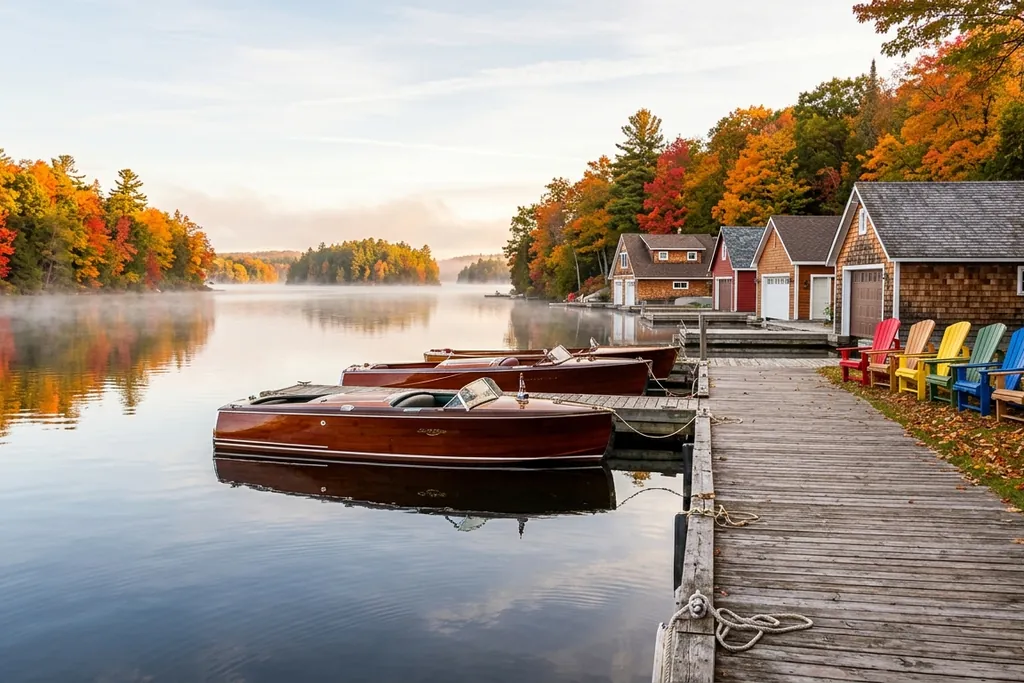
Before the locks, the site was an Ojibwe village. After them came the boatbuilders. With hundreds of island cottages and almost no roads, every summer family needed a launch. Port Carling shops built them by hand in cedar and mahogany. The village also turned out the disappearing propeller boat, a small launch whose propeller lifted into the hull to clear the rocks that lie just under the surface everywhere here.
When to Travel
July and August is cottage season, and the village fills several times over. Boats queue at the locks, and parking near the bridge vanishes on Saturdays. Lake water reaches the low 20s °C.
After Labour Day, in early September, most cottagers go home. The locks keep working into mid-autumn, and the shoreline maples peak in late September and early October. That's when to come. Many shops cut back to weekends after Thanksgiving, in mid-October. Winter is quiet and very cold, with the lakes frozen from roughly December to April. Half a day covers the village. Stay overnight if you plan to rent a boat.
What Not to Miss
Watch the locks from the bridge above them. Lock staff squeeze wooden launches, kayaks and big cruisers in together, and a full cycle is short enough to watch several in a row. Late morning on a weekend gives the best show.
The Muskoka Lakes Museum, beside the locks, covers the steamer era, local boatbuilding and the Ojibwe history of the site. It's small, so allow an hour.
Then get on the water. A rental boat or lake tour shows you what the roads hide: cottages reachable only by water and two-storey boathouses often grander than the houses behind them.
Buy a butter tart. It's Ontario's own pastry, first printed in a 1900 hospital cookbook from Barrie, just south of Muskoka. Bakeries here split between runny and set fillings, and between raisins and none, and locals argue about it constantly.
Takeaway
Park once and walk. The locks, the museum and the main street are all within a few hundred metres, and village parking near the bridge fills by mid-morning on summer weekends.
Huntsville & Lake of Bays (Dorset Lookout Tower)
Why Visit
Between Peninsula Lake and Lake of Bays ran what was billed as the shortest commercial railway in the world. It was about 1.8 kilometres of track, hauling steamer passengers over a ridge from 1904 until 1959. Its small engines, the Portage Flyer, now run at Muskoka Heritage Place in Huntsville.
Huntsville grew where the railway north reached a chain of navigable lakes in 1886. The hills around it held huge stands of hemlock, whose bark fed leather tanneries, and hardwood that fed mills. Tom Thomson and the Group of Seven painted this country, and dozens of murals reproducing their work now cover walls downtown.
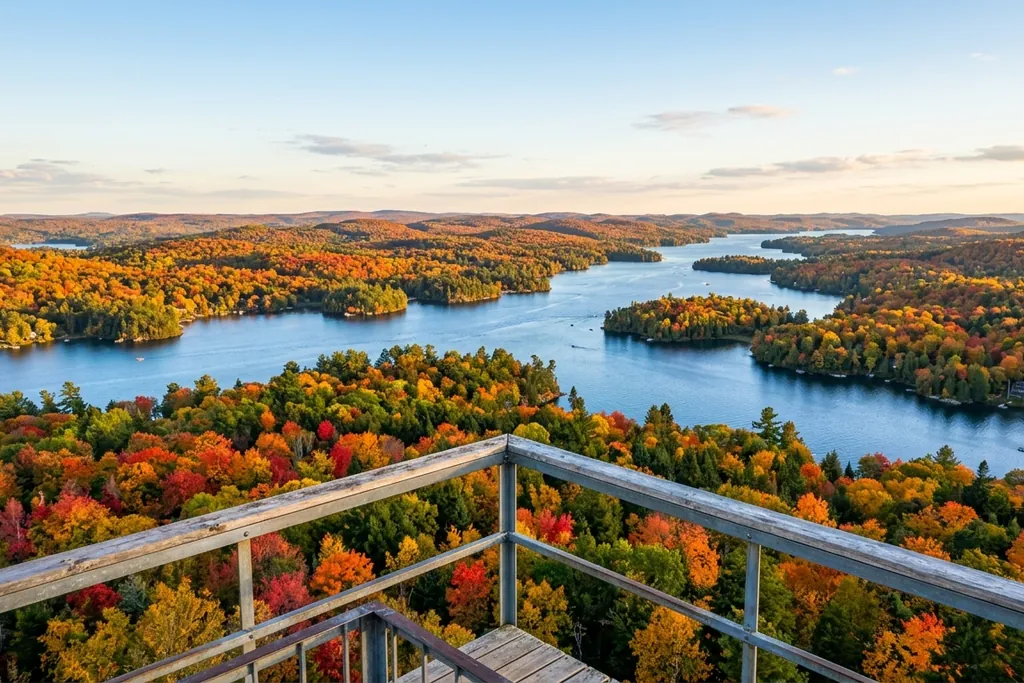
The Dorset Lookout Tower began as a 1920s fire tower, built to spot forest fires. Its replacement, about 30 metres tall, stands on a ridge roughly 140 metres above Lake of Bays. From the top, you can see why the lake got its name: its shoreline is a maze of long arms and inlets.
When to Travel
Huntsville sits in a snow belt, and lake-effect storms off Georgian Bay bury it from December to March. Winter highs hover around minus 8°C. Summer highs reach the mid-20s °C, with thunderstorms most afternoons in July.
Fall colour usually peaks in the last week of September or the first week of October. Sugar and red maples dominate here, so the reds run deeper than in pine country further east. Those weeks are also when the Dorset tower draws its biggest crowds. Mid-September or mid-October weekdays give good colour with far fewer cars. The tower generally opens from late spring to mid-autumn. Two days lets you cover the tower, the town murals and a drive along Lake of Bays.
What Not to Miss
Climb the Dorset tower early. Morning mist often fills the bays below and burns off by about 10 am, leaving clear views across the lake. The climb takes 10 minutes, and the platform gets crowded fast in colour season.
Walk Huntsville's mural route with a map from town. Seeing a Thomson canvas painted on a wall a few kilometres from where he worked is a strange pleasure. Allow an hour.
Ride the Portage Flyer at Muskoka Heritage Place, which also has a reconstructed pioneer village.
The local product is maple syrup. Sugar bushes around Huntsville tap their trees in March and April, when nights below freezing and days above it push sap up the trunk. About 40 litres of sap boil down to one litre of syrup. Buy it from roadside farms, and choose darker grades for stronger flavour.
Takeaway
Approach Dorset on Highway 35 from Dwight, which follows the lake, and get to the tower before 10 am in peak colour weeks. By midday, cars back up down the access road.
Algonquin Provincial Park (Highway 60 Corridor)
Why Visit
Algonquin is Ontario's oldest provincial park, created in 1893, and commercial logging still goes on inside it. It's the only provincial park in Ontario where that happens. The logging is kept out of sight of Highway 60 and the canoe routes, which is why most visitors never notice.
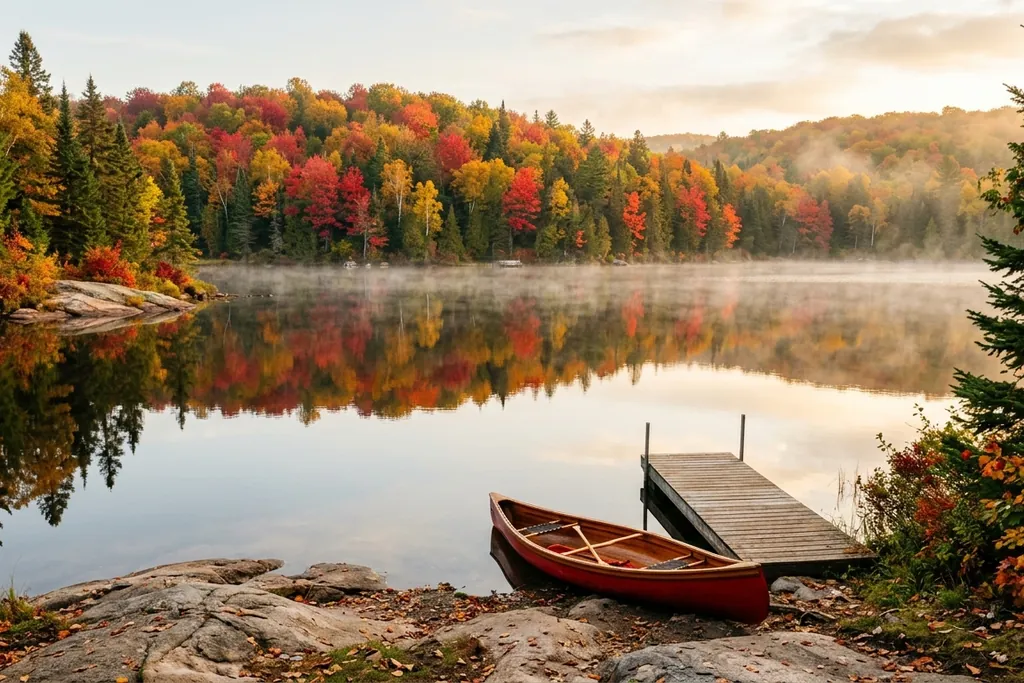
The park sits on the Algonquin Dome, a high block of Shield rock. Rivers including the Madawaska, Petawawa and Oxtongue all start here and drain outward. The west side has rich glacial soils that grow sugar maple and yellow birch. The east side has sandy soils left by meltwater, which favour pine. That split means the colour changes as you drive.
Highway 60 crosses the southwest corner for about 56 kilometres between the West and East Gates. Every trailhead is marked by its kilometre distance from the West Gate. Tom Thomson painted on Canoe Lake, beside km 14, and drowned there in 1917.
When to Travel
In May and June, moose come to the Highway 60 ditches to lick road salt, and dawn drives often turn up several. Black flies arrive in the same weeks, so bring a head net. July and August are warm, with highs around 25°C, and the park has run public wolf howls in late summer.
Fall colour peaks first on the western maples, usually in late September. Tamaracks in the bogs turn gold in mid-October, after the maples drop. Peak weekends bring the worst traffic in the park's year. Winter nights can reach minus 30°C, but the cross-country ski trails are excellent. Plan on two or three days.
What Not to Miss
Hike the Lookout Trail at km 39.7. It's a 2-kilometre loop to a cliff with a view across hundreds of square kilometres of forest. Go at opening time, because its small lot fills first.
The Visitor Centre at km 43 explains the park's ecology well and has a viewing deck over the Sunday Creek valley. The Logging Museum near the East Gate tells the story of square-timber camps and river drives along an easy outdoor trail, well worth a leisurely visit.
For a longer walk, the Track and Tower Trail at km 25 follows an old railway bed to a lookout over Cache Lake.
The genuinely local food is wild blueberries. They thrive on the park's thin, acidic soils, especially on rocky ground opened up by old fires, and ripen from late July into August. Picking for your own use along trails is a long tradition.
Takeaway
Reserve your Algonquin day-use permit online before you go for any fall weekend, because they can run out at peak colour. Better still, come midweek and be at your first trailhead by 8 am.
Go south to north: Gravenhurst, then Port Carling, then Huntsville and Dorset, finishing in Algonquin. That follows the order the region was opened up, so each stop's history builds on the last. It also leaves Huntsville as your final base, close enough to reach a park trailhead early. Allow about a week, or five days if you trim the town stops. Book your accommodation as soon as your dates are fixed, because rooms near the lakes and the park fill well ahead of colour-season weekends.
Frequently Asked Questions
Is Gravenhurst worth visiting?
Yes, Gravenhurst is well worth a stop, mainly for the RMS Segwun, a coal-fired steamship that has sailed Lake Muskoka since the late 1800s and is widely billed as North America's oldest. Add the Muskoka Discovery Centre's gleaming wooden launches and the Bethune Memorial House, birthplace of surgeon Norman Bethune, and you get a lovely, nostalgic taste of old Muskoka.
When is the best time to visit Port Carling?
Late September and early October are the sweet spot for Port Carling. Most cottagers have gone home after Labour Day, the locks are still operating, and the shoreline maples reach peak colour. July and August bring warm swimming water but also queues at the locks and scarce parking. Keep in mind that many shops cut back to weekends after Thanksgiving.
How many days do you need in Gravenhurst?
Plan on one full day in Gravenhurst, or two if you want a long steamship cruise plus a visit to the Bethune Memorial House. That leaves time for the Muskoka Discovery Centre's wooden boats, which deserve about two hours, and a late-afternoon sailing when low sun lights the ancient granite islands. Book autumn weekend cruises ahead, because they sell out.