Sydney & Beyond: Bondi, the Blue Mountains & Hunter Valley
Watch the Sydney & Beyond video distraction-free 0:24
All five stops sit inside one geological structure, the Sydney Basin, a vast bowl of layered sedimentary rock. Its sandstone forms the harbour cliffs, the coastal headlands and the Blue Mountains escarpment, and its northern edge reaches the Hunter. Nothing on this route is more than about 160 kilometres from the city centre.
So you get harbour, surf beaches, canyon country and wine country without a single domestic flight. Each place is a train ride, ferry or short drive from one base. The trip suits travellers who want swimming, serious walking and good food and wine in one compact loop. It also works if you're in town for the 2027 Men's Rugby World Cup and want plans beyond match days.
Listen to this guide
Prefer to listen? This guide is also a 6-minute episode of our podcast.

Also available as Trip Ideas by Ottimo AI on Spotify, Apple Podcasts and other podcast apps.
Sydney Harbour & The Rocks
Why Visit
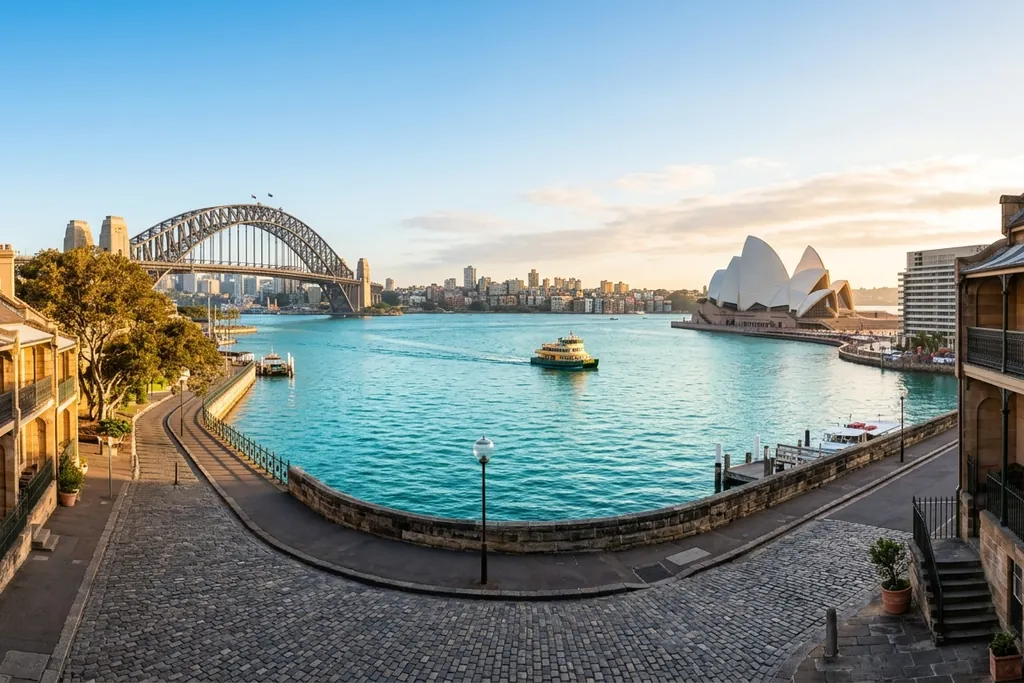
Sydney Harbour is a flooded river valley. When sea levels rose at the end of the last ice age, the ocean poured into a maze of sandstone gorges. That's why the harbour has dozens of coves, bays and headlands instead of one clean bay.
That sandstone shaped the city. The Rocks is named for the outcrops the First Fleet found at Sydney Cove in 1788. Convicts quarried the same stone for its warehouses and terraces. A plague outbreak in 1900 led to demolitions, and in the early 1970s developers planned towers. A union 'green ban' by builders' labourers blocked them, so you can still walk 19th-century lanes beside the bridge.
Across the cove, the Opera House was designed by Danish architect Jørn Utzon. He quit in 1966 and never saw it finished. Every one of its shells is cut from the surface of a single imaginary sphere.
When to Travel
Summer, December to February, brings highs in the mid to high 20s, humidity and afternoon thunderstorms. The heaviest rain tends to fall between February and June. Winter, June to August, is often clear and dry, with days around 17°C. Crowds peak over Christmas and New Year, when the harbour fireworks fill every foreshore, and through the January school holidays. Vivid Sydney projects light onto the Opera House sails from late May into June, and hotels fill for it. The best shoulder months are September to November and March to April: warm enough to be on the water, with fewer people. Give the harbour and The Rocks two full days, and use the area as your base for the rest of the trip.
What Not to Miss
Take the public ferry from Circular Quay to Manly instead of a harbour cruise. In about 30 minutes it passes the Opera House, Fort Denison and the harbour heads for a fraction of a cruise fare. Then walk across the Harbour Bridge on the free eastern footway from The Rocks to Milsons Point and look back at the city. Opened in 1932, the steel arch rises and falls by up to 18 centimetres as it heats and cools.
In The Rocks, skip the midday weekend market crush. Find Susannah Place, a row of 1840s workers' terraces, and walk through the Argyle Cut, a passage convicts hacked through solid sandstone with hand tools.
Then eat Sydney rock oysters. They're a native species farmed in New South Wales estuaries. They're smaller, creamier and more mineral than the Pacific oysters sold almost everywhere else.
Takeaway
You don't need to buy a transport card. Tap your contactless bank card or phone on ferries, trains and buses, and fares cap automatically each day and week.
Bondi to Coogee Coastal Walk
Why Visit
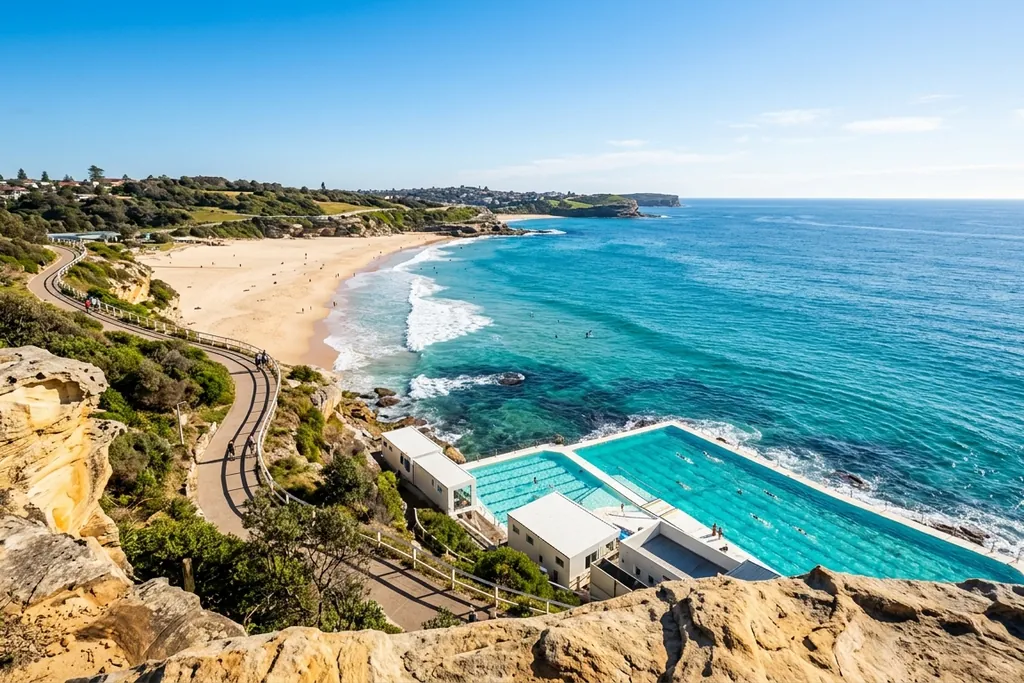
New South Wales has more ocean pools than anywhere else on earth, around 100 of them, and this six-kilometre clifftop walk passes several. They exist because the surf here is rough and daylight sea bathing was banned until the early 1900s. Pools cut into rock platforms let people swim safely while waves broke over the walls.
The same surf explains the lifesavers. Bondi's club, founded in 1907, claims to be the world's first. On 'Black Sunday' in 1938, its members pulled around 250 people from a rip in a single afternoon.
The path follows sandstone headlands linking Bondi, Tamarama, Bronte, Clovelly and Coogee. Midway, Waverley Cemetery sits on the cliff edge, and the poet Henry Lawson is buried there. In the other direction, on the North Bondi headland, Aboriginal people carved figures into the rock, including a whale.
When to Travel
The walk is exposed, with almost no shade between beaches. A summer midday in the high 20s with fierce UV is harder than it looks. Summer weekends bring shoulder-to-shoulder crowds and full car parks at Bondi. From May to November, humpback whales migrate past, and the headlands make good lookouts. In late October and early November, Sculpture by the Sea lines the Bondi to Tamarama stretch with outdoor artworks and very large crowds. For swimming without the crush, aim for March and early April. The ocean is at its warmest then, after a summer of heating, and school holidays are over. Allow half a day, or a full one if you plan to swim at every stop.
What Not to Miss
Start early, before 8am, and you'll share the path with local runners rather than tour groups. Walking from Bondi to Coogee takes two to three hours with stops.
Swim at Bronte, either in the baths or the Bogey Hole, a natural rock pool at the south end. Then stop at Clovelly, a long, narrow inlet with calm water. You can snorkel there beside eastern blue gropers, big, curious fish that local swimmers treat almost like old friends. Just past it, Gordons Bay has an underwater nature trail you follow by a chain laid on the seabed. At Coogee, look for McIvers Baths, a rock pool that has been for women only for more than a century.
Finish with a flat white. Sydney and Wellington both claim to have invented it in the 1980s, and Sydney's beach cafes take that rivalry seriously.
Takeaway
Swim only between the red and yellow flags, and stay away from the south end of Bondi near the rocks, where a strong rip runs out to sea even on calm-looking days. Carry water and a hat, because the cemetery stretch has no shade at all.
Manly & the Northern Beaches
Why Visit
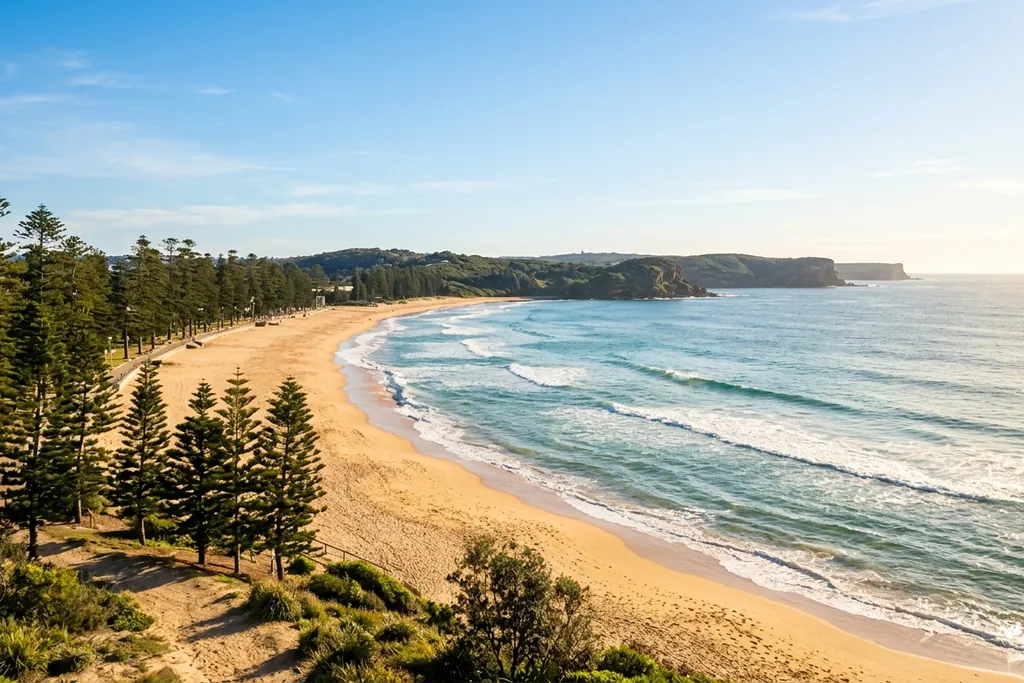
Manly is named after a compliment. In 1788, Governor Arthur Phillip watched Aboriginal men on the shore and wrote that their confidence and 'manly behaviour' gave the place its name. The suburb sits on a narrow neck of sand, so you can walk from the harbour beach to the ocean beach along the Corso in about five minutes.
Manly has a strong claim to being where Australian beach culture began. In 1902, newspaper editor William Gocher swam at Manly in daylight to defy the bathing ban, and the ban soon fell. In the summer of 1914 to 1915, the Hawaiian surfer Duke Kahanamoku gave a demonstration at nearby Freshwater on a board shaped from timber bought in Sydney. That day is often remembered as the moment surfing really took hold in Australia.
North of Manly, the Northern Beaches run along a thin peninsula between the ocean and Pittwater. The road ends at Palm Beach, below Barrenjoey Lighthouse, built in 1881.
When to Travel
Manly shares Sydney's climate, with summer highs in the mid-20s and mild, mostly dry winters. On summer afternoons a northeasterly breeze often makes the ocean beach choppy. Weekends from December to February pack the sand and the ferries back to Circular Quay. Snorkelling at Shelly Beach is best from late summer into autumn, when the water is warmest. Whales pass North Head from May to November. The best shoulder season is September to November, when crowds are thinner and the days are already warm. Give Manly one day, and add a second if you want to drive the length of the Northern Beaches to Palm Beach.
What Not to Miss
Walk ten minutes south along the shore from Manly Beach to Shelly Beach, inside Cabbage Tree Bay Aquatic Reserve. Fishing is banned, so the snorkelling is excellent. You'll see blue gropers, wobbegong sharks lying on the sand and, in winter, breeding Port Jackson sharks. Go before mid-morning, when the water is usually calmest.
Then climb North Head for a view straight back up the harbour to the city. The old Quarantine Station there held passengers from arriving ships from the 1830s until the 1980s. For a longer day, the Manly Scenic Walkway covers about 10 kilometres of bush and harbour coves to the Spit Bridge. It takes three to four hours.
Eat fish and chips on the harbour side and order flathead. It's caught off the New South Wales coast and is the classic Sydney choice.
Takeaway
Take the large standard ferry rather than the fast ferry, at least one way. The big boats have open outdoor decks, while the fast ferries mostly keep you indoors behind salt-sprayed windows.
Blue Mountains (Katoomba & the Three Sisters)
Why Visit
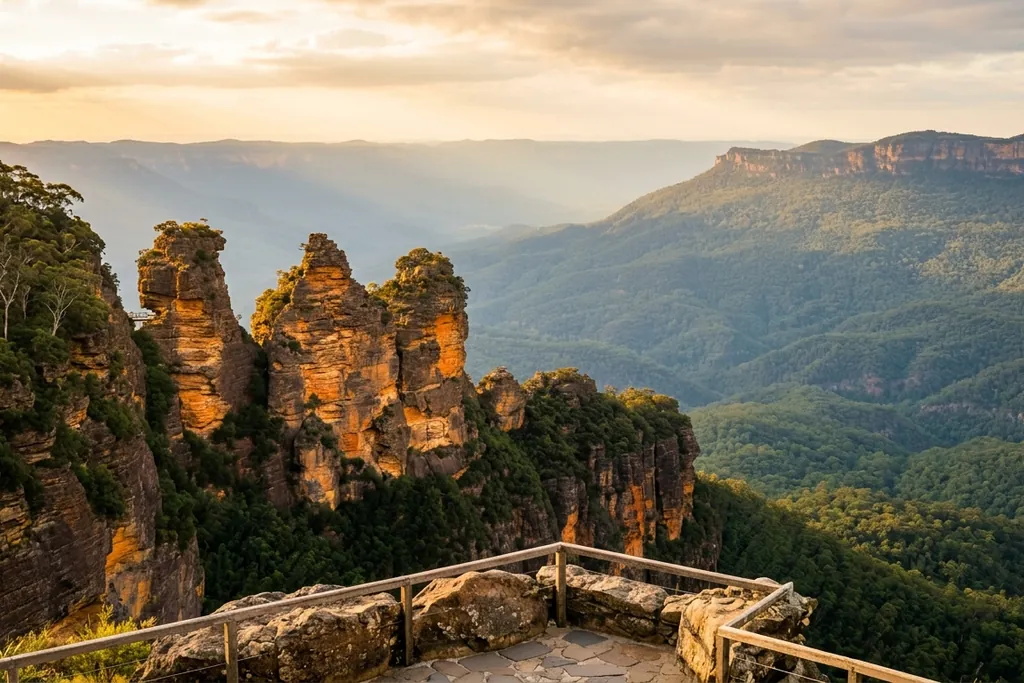
The Blue Mountains are not mountains. They're a sandstone plateau, about 1,000 metres high at Katoomba, that rivers have cut into canyons hundreds of metres deep. You look down into the scenery, not up at it. The blue is real: eucalyptus trees release oil vapour that, mixed with dust and moisture, scatters blue light.
Those cliffs kept the colony boxed in for 25 years. Europeans only crossed in 1813, when Blaxland, Lawson and Wentworth followed the ridges instead of the valleys. The Three Sisters at Echo Point are sandstone pillars left standing as softer rock eroded around them. The Gundungurra and Darug peoples have their own story of how they came to be.
In 1994, a park officer found the Wollemi pine growing in a remote gorge here. It was a tree previously known only from fossils. The region became a World Heritage area in 2000.
When to Travel
Katoomba runs several degrees cooler than Sydney. Summer days sit in the low to mid 20s, often with afternoon storms. Cloud can fill the valleys at any time of year and hide the view entirely. Winter brings frosty nights, days around 10°C and occasional light snow. Locals make the most of it: guesthouses serve 'Christmas in July' dinners, and Katoomba holds a winter festival around the midwinter solstice in June. Weekends and school holidays jam Echo Point by late morning. Autumn, March to May, is the best shoulder season, with clear air and the European trees of Leura and Mount Wilson turning red and gold. Give it at least two days, because a day trip from Sydney leaves too little time for walking.
What Not to Miss
Be at Echo Point at sunrise, before the tour buses arrive. Then walk down the Giant Stairway, around 900 steps cut into the cliff beside the Three Sisters. At the bottom, follow the Federal Pass track along the valley floor to the Scenic Railway and ride it back up. It was built in the 1880s to haul coal and oil shale out of the Jamison Valley, and it climbs at up to 52 degrees.
If you have half a day, the Grand Canyon track at Blackheath is the better walk. It's a loop of three to four hours through a narrow slot of tree ferns and waterfalls.
On the way home, drive the Bells Line of Road through Bilpin. Basalt soil and cool nights there grow apples, sold as cider and pies at roadside stalls in autumn.
Takeaway
Take the train from Sydney's Central Station to Katoomba instead of driving. It takes about two hours, drops you within walking distance of the cliff tracks, and saves you fighting for parking at Echo Point.
Hunter Valley

Why Visit
The Hunter breaks most of the rules for growing grapes, yet it makes one of the world's most distinctive white wines. Summers are hot and humid, and heavy rain often arrives right at harvest in January and February. Growers adapted by picking semillon early, at low sugar. The result is a wine of around 10 to 11 percent alcohol that tastes lean and citrusy when young.
Then comes the surprise. After five to ten years in bottle, with no oak at all, it turns toasty and honeyed, as if it had been aged in barrels.
Vines arrived in the 1820s. James Busby, who shipped hundreds of vine cuttings from Europe in 1832, helped stock the early vineyards. Afternoon cloud and sea breezes take the edge off the heat around Pokolbin, about two hours' drive north of Sydney. The valley's other big product is coal, mined further up the Hunter.
When to Travel
Summer is hot, often above 30°C, and harvest runs through January and February, when wineries are at their busiest. Autumn, March to May, is the best shoulder season, with warm days, cool nights and vines turning gold. Winter is mild and quiet, with crisp mornings, days around 17°C and fewer visitors. It's a good season for tastings by the fire. Spring brings budburst and new green growth. The real crowd problem is weekends, all year round, when Sydney visitors fill the accommodation and book out tastings. Sunday to Thursday is noticeably easier. Big outdoor concerts are held at vineyards in the warmer months, and beds sell out when they're on. Two days is right, with one night at minimum.
What Not to Miss
Taste an aged semillon side by side with a young one, ideally a bottle five to ten years old. Many cellar doors keep back vintages for exactly this, so ask. Then try Hunter shiraz. It's lighter and earthier than the Barossa style and was once sold as 'Hunter River Burgundy'.
Plan four or five cellar doors a day at most. Squeeze in too many and your palate will be worn out well before the afternoon is over.
Book a hot air balloon flight at dawn, the only time the winds are reliably calm. You'll get a view over the vineyards to the Brokenback Range. And at dusk, drive slowly. Eastern grey kangaroos graze between the vine rows and cross the roads without warning.
Takeaway
Don't drive yourself between cellar doors. Police run random breath tests on Hunter roads and the limit is 0.05, so book a driver or a small-group tour before you arrive, especially for a Saturday.
Start with Sydney Harbour and The Rocks to get your bearings. Then do the Bondi to Coogee walk and Manly as day trips from the same base. Head west to the Blue Mountains by train next, return to the city, and finish in the Hunter Valley, where you won't be driving anyway. Allow about nine days for the whole route. Before you fly, check your visa: most visitors need an ETA or eVisitor approval to enter Australia, and you must arrange it online in advance.
Frequently Asked Questions
Is the Bondi to Coogee Coastal Walk worth doing?
Yes, the Bondi to Coogee Coastal Walk is one of Sydney's most rewarding experiences. The six-kilometre clifftop path links Bondi, Tamarama, Bronte, Clovelly and Coogee, passing ocean pools cut into rock platforms, a cliff-edge cemetery and Aboriginal rock carvings. Start early to beat the crowds, swim at Bronte or snorkel beside blue gropers at Clovelly, and bring water and a hat, as shade is scarce.
When is the best time to visit Sydney?
The best time to visit Sydney is spring (September to November) or autumn (March to April), when it's warm enough to enjoy the water but far less crowded. Summer brings heat, humidity and peak crowds around Christmas and the school holidays, while winter is often clear and dry with mild days. Early autumn is a swimmer's favourite, as the ocean is at its warmest.
How many days do you need in Sydney Harbour & The Rocks?
Plan on two full days for Sydney Harbour and The Rocks. That gives you time to ride the public ferry to Manly, walk across the Harbour Bridge on the free footway, explore convict-carved spots like the Argyle Cut, and linger over Sydney rock oysters. The area also makes a great base for day trips to Bondi, the Blue Mountains and the Hunter Valley.